Insights from Telematics Projects Across the Globe

Allied Market Research recently published data pointing at a 34% CAGR in the usage-based insurance (UBI) market between 2016 and 2020. Such a rapid expansion would be nearly impossible without some form of collaboration between automobile manufacturers, insurers, and telematics technology platforms. 

Understanding how the three have collaborated across the globe in various pilot projects and initiatives can highlight critical insights, frameworks, and guidelines for other insurers contemplating the launch of a UBI product. While there have been several prominent collaborations across the UBI value-chain in different segments, here are some of the notable collaborative projects which have yield positive results for the involved entities:

1. Using Driver Behavior as a Metric for Market Segmentation 

The Floow UK, a telematics developer, produced research showing the inherent demand among the insurers for driver behavior data. Over 32% of insurers were seeking access to such specific datasets to understand the underlying risk profiles of drivers and tailor the insurance profiles in-line with these risks. 

Driver behavior attributes like hard braking, sharp turns, relative speeding, and acceleration are considered key in gaining insights. More comprehensive platforms like Kruzr can gauge other impacting attributes like fatigue and distracted driving as well. 

Conventionally, actuarial models have been the key mechanism to gauge the risk attributes for insurance applicants. Checking whether the risk is accurately priced or not is an altogether different discussion. Still, when the risks are not accurately priced, it can drive the consumer away and result in the loss of potential revenues. 

Given the fall in profits from the non-investing side of the business and highly concentrated revenues in the market, it is apparent that most auto insurers cannot afford to let potential revenues slip away with mispriced risks. Hence, the primary level of adoption is coming to segment the market beyond the actuarial models. Instead of using just the demographic data, geographic data, car’s details, and credit scores, insurers are seeking telematics data that helps them understand the risks associated directly with the driver’s behavioral attributes. 

Companies like Root Insurance have shifted their entire insurance risk pricing model to gauging driver behavior. The company offers insurance premium estimates in under a minute and offers annual savings of up to $900. Other than that, the company has worked extensively on ensuring the claiming process is simple and paperless. 

2. Exploring New Revenue Streams with Data Marketplaces

Data Marketplaces are already existing in capital markets services that use alternative data and marketing communications services where email databases are frequently used for sending out mass emails.

McKinsey forecasted $1.5 trillion in incremental revenue pools for the entire automotive industry with the help of connected cars. Telematics and the platforms using them will be a major component in this revenue growth.

Automobile manufacturers seek additional revenues by adding data-capturing capabilities to their vehicles right from the point of manufacturing. Ford Commercial Solutions, a division of the Ford Motor Company, recently announced its data services launch. The company has started installing modems into its commercial vehicles. Data on vehicle health, driver behavior, GPS, mileage, and fuel usage is collected by the modems and uploaded directly on a cloud platform, engineered and maintained by Ford. 

The same data is then made accessible as an on-demand service to telematics companies and fleet owners who either use it for direct analytics or enrich their product offerings. 

The insurers might be on the buying side of data if they are not already running UBI programs independent of modems and black-boxes pre-installed by automobile manufacturers. Insurers, who possess the consent from consumers, might monetize that data by making it available to advertisers. 

Kruzr collects a wide range of data-points such as hard braking, acceleration, speeding, sharp turns, drowsy behavior, and fatigue. This data is then augmented with GPS, traffic, and road conditions data. The insurers and automobile manufacturers who want to use this data can serve as an additional line of revenue, with advertisers and other industry incumbents acting as the key buyers. 

3. Telematics for Product Development and Features Outside Insurance 

As per a Frost & Sullivan report, the number of connected cars with embedded telematics has been projected to grow by nearly 3x between 2018 and 2025. While the apparent application of this data would be in the form of usage-based insurance products, the same data is being leveraged for other use cases. 

The telematics data available with Hyundai Ioniq and Kia Niro provides drivers with real-time information on charging information, nearby stations, and chargers’ availability. Honda has taken this a step ahead with its SmartCharge Beta Program. The program uses telematics data, and the data pulled from the city’s grid to direct the drivers for charging their cars when the power demand is low in the city. This helps the city’s power grid maintain a consistent power supply instead of working with sub-optimal calibrations made for fluctuating demand. It helps the drivers get quick access to already available power, which other consumers cannot use.

Kruzr SDK has been optimized to provide white-label solutions that let the automobile brand take the center-stage. The data availability, navigation, weather data, and traffic congestion insights are already aggregated to calculate real-time risk. Adding more geospatial data for expanding the use-cases is an easy integration possible with the platform.

4. Creating a Trust-Based System and Accelerated Claims Processing 

Ping An, one of the largest automobile insurance companies globally, has an internal team focusing on the applications of AI and how it can be used in conjunction with telematics data to provide better auto insurance products. 

The company has recently deployed two key offerings. The first one focuses entirely on gauging the driver’s behavioral attributes. The driver is given an individual scoring in terms of trust quota, using big data and AI. This trust quota is used in streamlining self-help insurance claims. 

The second offering focuses on expediting the self-help process. Right after an accident, the customer is asked to click photos of the car, enter the amount of the repairs and the damage incurred. Then, using the trust-quota to weigh the sincerity of the claim along with deep learning and visual computing, the Ping An app determines the extent of covered damages. The system closes the process in 3 minutes between clicking photos and deciding on the claim application.

In Conclusion

Telematics should be looked at as a strategic initiative that can expand into new markets, provide better services, and create more optimized insurance products. You can virtually use the telematics data for delivering value in any direction of the value-chain, with a comprehensive platform like Kruzr

Consumer Perception and the Increasingly Growing Demand for Telematics and UBI

E&Y data shows that over 88% of all new cars produced in 2025 will carry a pre-installed telematics system. The automobile manufacturers, insurers, and telematics technology leaders stand to benefit from that development. That trend towards 2025 shows a more important undercurrent – robust and growing consumer demand for more accurately-priced and affordable insurance products.

As per data published by the Associated Press, 75% of consumers in the U.S. want an insurance product that migrates from the legacy risk calculation metrics, which use demographic data, vehicle information, and credit score to determine the risk premiums an insured customer pays. Instead, they wanted a more accurately-priced insurance product that pays attention to their driving patterns and uses that as the benchmark to determine their risk profile.

The other side of the equation shows how the consumers have been reacting to being offered a UBI product. The same AP dataset showed that over 50% of customers accepted the offer when their insurer wanted them to shift to a UBI platform. Since it is already a known fact that UBI can help in mitigating payout risks for the insurer, the insurers have to nudge the consumers to shift to a new product, and over half of them would be happy to do so. 

While it may seem that the cost of adopting telematics technology can be too high, given the prices of IoT devices, sensors, and accompanying software, such overheads can be easily avoided using mobile apps. 64% of the consumers included in the earlier-mentioned dataset were eager to try mobile apps that contributed analyzed their driving and helped them get a preliminary understanding of their risk profile, as far as it came with a free trial. 

What is Driving the Demand for UBI Products?

Both the industry and the consumers are seeking usage-based insurance products that can help their particular interests. But, drilling a bit more into this inherent need can unravel themes that can optimize insurance products precisely as per consumer needs. As the UBI market grows at a CAGR of 29% over the next six years, as forecasted by Acumen Research, these themes will start emerging as the inherent drivers of consumer demand for UBI:

1. 83% of Consumers Prefer an Insurance Product That Protects Their Family on the Road. 

The AP-data highlighted a critical insight – insurance products have a direct impact on the family of the insured, as well as the insured person. While that insight barely affects the pricing of risks in insurance products, it is an essential factor for consumers. Earlier, there was not much that insurers could have done to satiate this need. Some insurers provided on-demand vehicle repair in case the insured customer faced a problem. But, that was the limit of leveraging this insight. 

With telematics and UBI products that use Kruzr, the scope of building on that insight has evolved. Kruzr collects more data than most of the other telematics platforms. This is critical because a driver is not a standalone entity existing on the road. Several other conditions contribute to the risk associated with the driver and the car. Some of these factors include weather data that can have a direct impact on the car’s performance or on-road visibility, traffic & congestion, which can lead to nudging riskier driving behavior as individuals try to recoup the time lost in the traffic, and navigation data that suggests risk-prone driving zones based on historical data.

Most of these data-points are publically available from reliable sources. Kruzr aggregates all this data and integrates into providing the driver with real-time advisory on what forms of risks are deterministically forecasted if she/he takes a particular route at a specific time. This seemingly little add-on can help drivers make more informed decisions about their real-time risk profile, especially when they have family members accompanying them. 

2. 53% of Consumers Have No Problem in Sharing Driving Data with Telematics Platforms.

Privacy has emerged as a significant concern for many consumers, even outside the insurance industry. Common wisdom suggests that people want increased privacy or control over who gets access to their data. 

The AP report states that more than half of the consumers in their dataset had no issues sharing their driving data with the telematics platforms. This makes intuitive sense as drivers who can see their insurance premiums drop with safer driving practices nudged by tips & real-time suggestions given by platforms like Kruzr would establish the causality between sharing the data and getting more affordable insurance. 

The role of privacy comes into highlight when compliance becomes a key consideration for the insurers. GDPR is probably one of the most remarkable sets of regulations that emphasized the consumers’ right to data protection. Interestingly, even if an insurance provider is not in the European Union but is serving the EU citizens in any form, the insurer would be subject to GDPR policies. As far as the insurer uses products like Kruzr, which are compliant with these guidelines for collecting, processing, and storing the data, the insurer’s cost of compliance gets notably reduced. 

3. According to a Published Study, 25% of Millennials Use Telematics Data to Improve Their Driving Style.

The AP-report also substantiated a use-case for UBI and telematics data – improving driver performance. While precise data show safer driving can reduce claims by up to 20% for the insurer, from the driver’s standpoint, this is becoming one of the critical themes why millennial consumers would be more accommodative to UBI. 

For the insurers, focusing on pricing the risk might be the primary objective. But for the drivers, avoiding a crash and improving the driving style is more imperative. That is the crucial reason why one-fourth of millennials are open to using UBI for improving their driving skills. 

The infrastructure, data, and technology are already in place to achieve this. Kruzr collects several data-points in a drive and aggregates to assess the risk-score pertinent to the driver. Along with this, as soon as the driver is moving into riskier territories, the Kruzr mobile app can give audio-based nudges that alert the driver to shift to a safer driving style or route. This real-time feedback mechanism is non-intrusive as it does not make the driver move her/his focus away from the road and on to the screen while still providing feedback just when it is essential. 

The non-intrusive nature of driving nudges is a crucial feature. Many consumers are under the false perception that focusing on the screen to see real-time tips on safer driving can distract the road and defeat the purpose. 

4. 57% of Respondents to a Willis Towers Watson Survey Witnessed a Drop in Their Insurance Premiums, After Shifting to UBI.

The study highlights a key benefit that many consumers are looking for – lower insurance premiums. From the insurer’s perspective, the focus is on providing more accurate risk-pricing. And that is where the data from the Willis Towers Watson study stands out. 

Suppose 57% of consumers have witnessed a drop in their payable insurance premiums. In that case, it means that the same amount of consumers were being charged higher premiums before the UBI program was offered to them. While many consumers might have stayed with higher premiums, there must have been some consumers who chose a competing insurance product with lower premiums. Mispricing risk can lead to a loss of potential revenue opportunities for the insurers.

Kruzr solves this problem by using the Kruzr Safety Index. The platform has been engineered to pull data from several resources to get a more comprehensive and timely understanding of driver-risk. It can make insurance pricing more accurate and provide fairer premiums to consumers. 49% of consumers from the same survey stated that they sought greater control over their premiums. This shows that a large proportion of consumers would be happily responsive if the insurance premium calculations are shifted to a more accurate telematics platform, like Kruzr.

In Conclusion

While telematics and UBI have a significant value proposition for consumers and insurers, the market is yet to adopt them as the key categories in auto insurance fully. Several reasons like the complex relationships between automobile manufacturers, insurers, and consumers, the concerns on privacy issues, and the lack of accuracy in the underlying technology have contributed to this sub-optimal adoption. 

Kruzr can serve as the platform that unlocks value in this ecosystem. Aggregating data from multiple sources, applying the right perspective to calculate the risk scores, and providing real-time feedback for proactive measures are just some of the features that can help the insurers and the consumers overcome the barriers to increased adoption. To know more about how Kruzr can help you offer more accurate UBI products that capitalize on the growing demand by satisfying consumer expectations, click here.

Importance of Innovation in Insurance

The Need for Technological Innovation in Business

There are several frameworks structured by management theorists to assess whether a business will be able to survive in the long run or not. From financial heuristics like a business’ capacity to reinvest in itself to more market-oriented thumb-rules like competitive differentiation – many factors go into forecasting which businesses stay consistently profitable over the long run. Innovation or being a part of market-changing innovation is a strong predictor of how long the business will stay sustainably profitable.

  1. Nokia and the Smartphone Revolution

Nokia was established as a pulp-mill in 1871. As it kept reinventing itself over the years, it became one of the largest telecommunication device developers, manufacturers, and sellers. Nokia sold computers, phones, pagers, and several other key pieces in the telecommunication infrastructure value chain. That was the key reason why Andy Rubin, the founder of Android, wanted his new operating system to be a part of the Nokia-ecosystem.

However, Nokia had other plans. Between 2008-2012, Nokia hardly reacted to the hyper-growth attained by the Google-Android partnership. Eventually, as it saw market share slipping, it partnered with Microsoft. It took several years and failed campaigns to bring Nokia to its lowest valuations in recent history. Today, Nokia is operational but exists in a much smaller form than it once used to. 

The primary reason for Nokia’s decline was not rejecting some new-age startup called Android but rejecting the notion of third-party applications available on the company’s OS. Nokia made its own OS and then used its own apps to provide functionalities. Android tilted the model on its head by bringing the third-party app-store revolution to the masses, alongside Apple. Eventually, Nokia missed the boat and paid the due price by not getting to participate in the consistent rally of profits in the smartphone business. 

The insurance industry is going through a similar revolution with telematics, pay-per-users variants, and big-data integrations. Some insurance companies have taken matters in-house while others are partnering with comprehensive technology platforms like Kruzr. 

An insurance company that wants to be a part of the more efficient insurance industry, being for the very near future, will have a telematics program powered by competitive technology that makes insurance more affordable for the customers without compromising on the coverage. 

  1. Mission Insurance Company and the Risk Management Revolution

In the 1980s, Mission Insurance was operating one of the largest insurance platforms in the United States. The company was one of the leaders in the workers’ compensation segment, and from the looks of it, was positioned for growth. With its strong franchise and profitable core business, there was no reason for the company to work on liquidation or insolvency plans. 

However, back then, many insurance companies were not running optimally managed risk management practices. Since they had significant market intelligence and economies of scale in the core business, many companies like Mission Insurance Company were able to stay profitable for years in their core verticals. As the company started expanding into other insurance products, it faced quick and deepening financial troubles. 

Mission backed several unprofitable ventures and took reinsurance risk with third-party insurance products. Since the company did not have a robust risk management framework, it found itself in the middle of long-term liabilities that went way beyond the company’s earnings. Eventually, the company had to file for bankruptcy, and the proceedings lasted for more than 25 years. Many lenders got less than 40% of what the company owed them. 

Technology solutions like Kruzr can help modern-day insurance companies avoid a similar trajectory. Since the core insurance market is getting competitive and profits are eroding, it is natural for insurance companies to expand into new products. Kruzr can help the insurance companies add new products like pay-per-use, which essentially operate in the same market economics but cater to a new segment of consumers who seek affordable and yet comprehensive insurance. The entire platform operates on the prowess of data analytics, designed to measure risk parameters in the real world – predictive risky behavior, big-data inputs on traffic & weather conditions, as well as driver nudging to mitigate driving inaccuracies. 

  1. Transit Casualty Co. and the Need for Expansion

Transit Casualty Co. was found in 1945 and came with an innovative product line – it insured buses and public transit systems. While the product was innovative and there was a considerable market, Transit soon started expanding into verticals not naturally cohesive with its platform. 

The company insured several businesses across the globe – dumping yards, breast implant makers, haulers, and tobacco companies. The company was dependent on insurance brokers to run its insurance policies into the market. Since its model kept a layer of agents between the company and the businesses buying the insurance policy, Transit never had a deep understanding of what market it was expanding into. 

As a matter of fact, when the insolvency committee went to the Transit HQ, they couldn’t find most of the documentation for the policies that drove the company into bankruptcy. The company expanded into several product-lines and did so using entirely third party-driven solutions. 

At its core, Transit failed to keep track of data. Many other companies had a similar model of working with associates, partners, and brokers. Most of them did not go bankrupt. Transit wanted to drive its entire business on autopilot, without having the checks & balances in place. 

Kruzr ensures that your automobile insurance products are not running on proxy or third-party data. All the data aggregation happens at the customer-level, and the risk metrics hence calculated, are an accurate assessment of what you will owe if the claims are put in place. Since this happens in real-time with great sensitivity to economic, behavioral, and large-scale parameters, even when you introduce new products like pay-per-use, you have a strong grip on the risks you are undertaking. 

Telematics and Innovation in the Insurance Industry

What android did to the smartphone business, telematics, and data analytics are doing to the insurance business. The market data speaks for itself: 

  1. UBI is Already On-Track for a Major Thrust in Global Adoption.

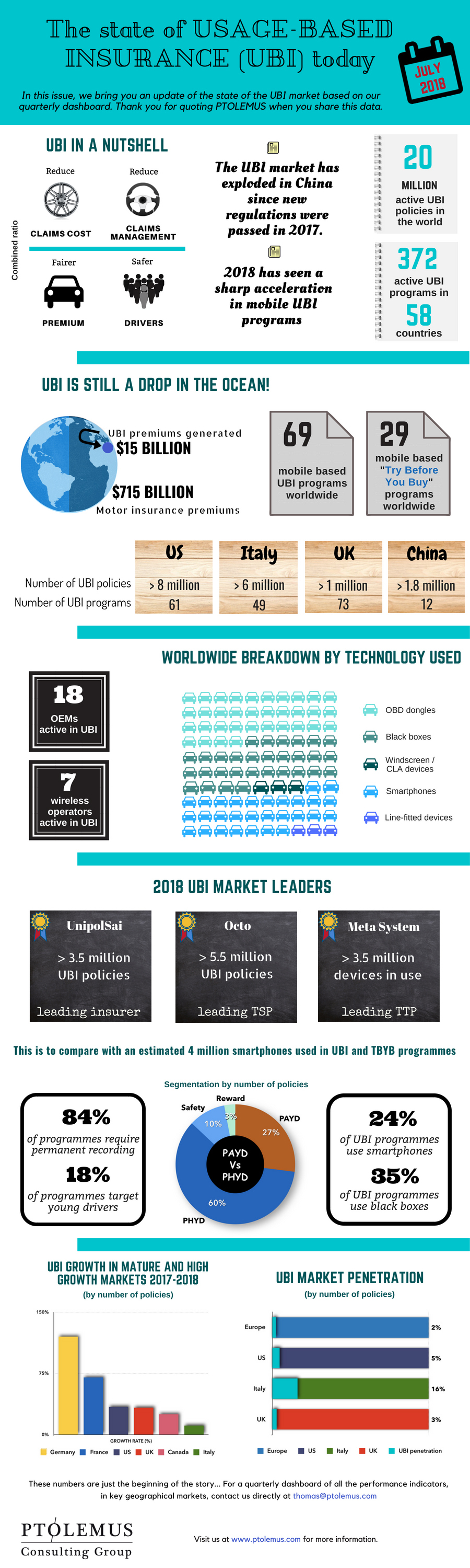
Usage-based insurance has started accumulating global traction. Since more companies are operating with relatively more data, they have a clear understanding of the headwinds in the market. That is the reason why a globally unified trend of adoption in the UBI market is proof of concept. UBI-driven policies will touch the $115 billion mark in 2026, having grown at a CAGR of 21%. If you believe that UBI is still a concept for the future, the recent numbers will give you a more informed perspective – in 2018, UBI-paired policies contributed premiums worth $15 billion globally. 

  1. UBI and Telematics Can Help You Control the Risk Factors.

Market-traction might not always be the intuitive reason why companies take up new product strategies. UBI is as much a risk-management tool as it is a new product category. 

Platforms like Kruzr are able to gauge metrics that were earlier not even included in the policy documentation. Policy-holders that have Kruzr app installed on their phone are communicating data hard-braking data in real-time. Insures can now have a better understanding of such strong indicators that describe the associated risk at a greater length and also have strong predictive powers. 

Kruzr goes beyond the risk-measurement and helps the insurance companies mitigate risk. University of British Columbia researchers showed a 21% decline in hard-braking behavior after users opted for policies operating on UBI and telematics. A similar trend is visible in the enterprise space. Willis Towers Watson’s research showed an 80% drop in crashes among fleets managed using telematics solutions.

Built on this insight, Kruzr’s app nudges the driver whenever she starts exhibiting risky or drowsy behavior. Insurers who are working only with risk parameters are able to price the risk into the policy, but if too many claims start coming in, it would be a disaster as big as the ones faced by companies working with not-so-robust risk management programs. Hence, Kruzr ensures that risky behavior is mitigated right when the probability of risky behavior starts going up. 

  1. Efficient Product Engineering with Solutions that Tackle a Wide Range of Problems. 

An easy way to launch a product that can drive a company into liquidity or solvency issues is by investing significant capital into it before the product is even brought to market. Insurance companies like Mission and Transit faced a similar issue because a large portfolio of their products was run by the brokers and agents. By the time the product reached the end-user, it was already carrying the weight of overheads. 

The Kruzr team worked on the problem right at the outset. With a readily available Software Development Kit, any insurance company can develop a white-label solution on top of the Kruzr platform. This reduces the go-to-market time and shrinks the cost of development, testing, and deployment to its lowest denominator. And all of this works, even as the Kruzr technology provides a better grip on the risk parameters and a more innovative set of UBI products. 

Conclusion

No one would say Nokia, Mission, or Transit did not innovate or expand. However, it is not difficult to conclude that the direction of their investments in innovation was not quite right. While an insurance business should stay away from such existential risks, it cannot entirely skip cycles of innovation. Eventually, every insurance business has to stay ahead of the curve and adopt relevant technological innovations. 

Kruzr brings an all-encompassing set of solutions in the form of its AI engine, comprehensive risk assessment platform, predictive analytics, and driver-behavior nudges. When integrated with the right insurance product portfolio, Kruzr can make the missing piece of your innovation puzzle. 

Integrate Kruzr to Widen Insurance Product Portfolio

The insurance industry was considered a safe-haven for investors and consumers. Lately, the industry has been facing tailwinds coming from increasingly adverse market dynamics:

  1. Marketplace Differentiation: Four companies in the U.S. directly underwrite 51% of the insurance. This large and concentrated base means that most market growth is going only to the larger players. It also leads to higher competition in the other 49% of the market, as more businesses have to compete for the same pie, where the economies of scale are titled towards the larger companies.
     
  2. High Switching Preference: As per a survey conducted by Bain & Company covering over 174,000 respondents across 18 countries, 80% of digitally active millennials were ready to switch their insurers. Millennials, even if not the largest insurance market segment at the moment, is the foundation for the market in the future. Insurers that can retain this segment will have virtually secured growth for the future. But the millennial demand is volatile and not loyal to the legacy brands. The same survey reported that many millennials are ready to take insurance even from unconventional or new companies in the space.
     
  3. High Price Sensitivity: In data published by Reuters, 79% of respondents stated that if insurance prices became ‘too high,’ they would not get insurance in the first place. Up until now, price sensitivity was a factor of competitive positioning. As far as your insurance products had a competitive value proposition, you had recurring demand. With changes in the economic strata, more customers are considering avoiding insurance in the first place. Some laws dictate mandatory insurance policies, but they can largely get skimmed off by the major companies in the market, which already have a large distribution network, strong brand equity, and existing market share.


  4. Increasing Competition: The market data clearly highlights the competition for 49% of insurance policies directly underwritten by companies other than the major four insurers. But the competition also exists in the customer journey. Qualtrics’ research shows that 95% of consumers, who are in the market to get a new insurance policy, are considering at least three different brands. This means that no matter how strong your NPS is, your target consumer is evaluating you with at least two other brands.

How Can Kruzr Help You Widen Your Product Portfolio?

Everyday business logic would suggest that companies should focus more on differentiation. While increased spending on brand awareness campaigns may seem like a feasible solution, the results of such campaigns tend to be short-lived if not backed by equally innovative and relevant innovations on the product side. This is where Kruzr can be of great help to your insurance products portfolio.

Instead of being in the same market, populated by companies with deeper pockets and existing market share, competing for the same consumer mindshare, you can segment the market into innovative categories with more relevant and accessible products for the consumers. 

  1. Reach the Price-Sensitive Consumer by Lowering the Cost of Ownership for Your Policies.

Many price-sensitive consumers have a resonating issue with the price of owning the policy versus the benefits it offers. It is difficult to put price-tag on life and accidental risks, but consumers do seek a better value proposition from their insurance policies. 

Pay-per-mile policies can control the cost of ownership for your consumers, mitigate your risk-profiles, and help you dominate an accessible segment of the market. Any consumer who understands her driving frequency would see the value in paying insurance premiums only for the miles she is driving. 

The economic benefit of insurance products, where the low-risk drivers pay for the high-risk ones, gets expanded since you get a better understanding of the risk-profile on a per-mile basis instead of a per-insurance basis. 

  1. Provide Value-Added Services Like Driver Assistance, Which Make Insurance More Affordable for the Customers and Less Risky for You.

Bain & Company published a comprehensive study, highlighting the three key parameters that define insurers who outperform their peer-group in the insurance market – excellence in the core business, offering interconnected services, and prioritizing innovation. Kruzr’s Active Driver Guidance Interface can help you achieve all three. 

The platform takes inputs from a wide range of datasets that includes traffic areas, routes across maps, and driver performance. Based on proprietary analytics, the platform can forecast when a driver is running into riskier behaviors. It does so using voice-notifications that make sure the driver doesn’t have to shift her eyes from the road to the screen. This feature ensures that the drivers are practicing safer driving, which serves as an inherent feature for the consumers and significantly brings down your risk profile for the number of claims. 

  1. You Can Ensure Your Customers with Confidence that Their Telematics Data is Secured and Private.

There are several telematics solutions available in the market. Many of these platforms are dependent on sensors installed in the car or a dashboard camera. While the data-feed coming from such systems can help you evaluate the risk parameters in real-time, it also poses a significant threat to the consumer’s privacy.

Such solutions can work in industrial use-cases like transportation and logistics, as the driver is practically working while the dashboard camera or the sensors are recording the entire drive. However, for people who are using the vehicle for personal reasons or even for something as simple as driving to work, having a camera that records all your movements when you drive might not be very user-friendly.

Canadian Underwriter, an 86-year old publication, surveyed 1000 people and showed that 54% of respondents were not comfortable in sharing their personal information. Drawing an analogy clears the air here. Most users are comfortable in sharing their Fitbit data, which is also stored on the cloud like the data collected by telematics sensors and dashboard cams. The difference is that the users are aware of exactly how the data from their Fitbit will be used – for benchmarking their performance. For installed sensors and the dashboard camera, the feedback loop between an affordable policy that comes later and the privacy issue at hand, is long and complex. 

Kruzr gives you a more pragmatic solution by leveraging the hardware and software of the smartphone. Instead of installing cameras or sensors, users with the Kruzr app can share their driving data without concerns about a privacy breach. The platform is engineered to communicate the correlation between driving quality and insurance affordability, which establishes the value proposition to and for the user. You get the benefit of risk mitigation with more data, and the users get to keep their privacy as well as access more affordable insurance. 

In Conclusion
Most insurance businesses have focused on optimizing their risk parameters based on the same actuarial models which have been running for decades. Not only has that pushed out several customer segments on the edge of leaving the market, it has also left a lot of profit on the table for the insurance companies. With platforms like Kruzr, the insurance companies can finally shift the focus to optimizing the customer experience. And this can be done beyond the brand campaigns or an app to help with customer queries. 

Core products powered by the comprehensive capabilities of Kruzr like analytics, AI, and telematics can help insurance companies expand the width and depth of their product portfolio. The insurance products hence created, will be more affordable and customized for the end-user, and carry lower risks for the insurer. Value-adding features like predictive risky or drowsy driving with real-time nudges help the drivers stay safe and save the insurer from claims. With the customer experience at the center of the product and risks optimized across the board, Kruzr can help you get the market momentum of growth and expansion back on your side. 

Case Study: Understanding Progressive and Chubb’s Underwriting Profitability

As per Insurance Information Institute, Progressive and Chubb represent two different stories of the insurance market. Progressive remains to be one of the top three companies in the segment, while Chubb is generally counted as the one of the bottom five of the top ten auto insurers in the United States.

Both the companies have varied business lines that focus on commercial and personal insurance. While Progressive has a greater focus on auto insurance, Chubb has other insurance lines as well. Drawing a contrast between both the insurers can give a more detailed perspective on the case for underwriting losses.

Price & Profitability Vs. Market Share

Progressive has been reporting underwriting profits for a while and has enjoyed a high market share as well. However, in its 2019 statement given in the annual report, the company said the market conditions have turned a little unfavorable. The primary reason attributed to this statement of caution was the lack of increased prices and underwriting profitability coming together for the first time in years. Up until 2019, every year, most of the auto insurers were increasing the prices and yet finding it exceedingly difficult to stay above the breakeven line for underwriting. Due to its scaled efficiencies and focused offerings, Progressive was able to get more market share, while maintaining healthy margins. 

In 2019, the price increase over the years paid off a little and the auto insurance industry did not have to increase prices to remain profitable at the underwriting level and maintain a market-share. Progressive lost some market share, but its scale allowed it to maintain profits. That highlights a critical point – insurers can either choose to increase the prices to break even or maintain a market share with thin margins. 

Since Progressive is operating at a large scale and has market-leadership, it can afford keeping the prices unrevised. Most insurers that did not have a healthy margin or reserve allocation system would find it exceedingly difficult to continue in the business without having to increase the price and losing market share almost every year. 

Volatility at the Underwriting-Margin Level

Chubb, the other major auto insurer from the list, shows a different side of the picture – volatility. Since it operates several business lines, it is difficult to unravel the underwriting losses attributable specifically to the auto insurance segment. However, the North American Personal P&C Insurance can be used as a proxy since it includes automobile insurances. 

In 2016, the company made $432 million in underwriting profits which is a healthy figure when analyzed in a silo. However, in 2017, the company made an underwriting loss of $29 million, followed by a $156 million profit in 2018. This shows the high volatility that lies in the underwriting margins. 

One Solution, Two Problems- “Data”

Underwriting profitability can be improved, and the volatility of the margin can be brought down with the help of data. Companies can categorize its drivers not only based on their history, age, etc. but analyze the daily driving behavior to predict the likelihood of a claim with insurtech solutions.

Understanding this can help predict the outgoing claims better at a regular interval and adjust the incoming premiums more accurately without increasing the prices for all policyholders based on data to avoid hit on the company’s margins, losing loyal customers due to pricing and risk of high volatility.

What Does this Mean for Smaller Auto Insurers?

On an aggregate basis, the top ten companies in the auto insurance space have directly underwritten about 47.7% of premiums in 2019. And even for these top ten companies, there are visible issues with price & profit vs market share sensitivity as well as underwriting margin volatility. If a relatively smaller company with lack of sophisticated capital structures, high economies of scale, or national presence is concerned, the effect of these issues can be exponential on the forthcoming underwriting losses.

Hence the call for speeding up adoption of innovative solutions requires immediate action from insurers to help underwriters increase efficiency of their models.

The Plague of Underwriting Losses

In a logically linear world, the auto insurance industry would be inherently flourishing. But the world we inhabit has more complexities than the ones visible on the surface. Intuition would guide us to believe that since more people have been buying more cars, the auto insurers must be running in profits. 

The reality is in contrast with that assumption. While auto insurance companies are making profits, a large portion of these profits are attributable to their investment activities and not the core insurance business. The cure auto insurance business has been under siege due to a growing problem of underwriting losses. 

The State of Underwriting Losses

The auto insurer subsumes the risk on each insurance policy and is paid in the form of premiums to take that risk. When aggregated together, if the premiums do not exceed the costs that are incurred, the auto insurer is running into underwriting losses.

The last few years have been challenging, with the data clearly showing an upward trend in underwriting losses among auto insurers. Here is the data, as presented by the Insurance Information Institute:

Year

Incurred Losses (Billions USD)

Increase

2015

145

2016

163

12%

2017

167

2%

2018

173

4%

2019

184

6%


2016 was a watershed year when the incurred underwriting losses grew by over 12%, year-on-year. Assuming that immediate corrective action was taken by auto insurers, the number got under some control in 2017. However, as the behavioral impact of the losses in 2016 started fading away, the corrective measures also lost their efficacy and the losses reverted towards the mean. Each year since 2017, the losses have been growing at an alarming pace on an annual basis. 

Triangulating with other data points resonates with the idea that underwriting losses have been increasing at a noticeable pace in the last five years. FitchRatings has published data supporting this claim. Statutory combined ratios, which take into account the aggregated loss and expenses against the premium earned, were at 77% in 2017. In 2018, this figure jumped to about 108%. 

The quantum of these losses can be understood by the fact that incurred losses shadowed nearly 67.9% of the $217 billion of net premiums earned by the Private Passenger and Auto Insurance Industry in 2017. By all metrics, such issues would have made headlines of the reports published by news dailies and analysts covering this industry. However, since the investment income has filled the space left by these growing losses, the capital markets have not shown dramatic concerns. 

How Did We Get Here?

It would be naïve to assume that the auto insurance industry did not take any measures to counterbalance the impact of underwriting losses. The real issue here is that most of these measures have not unfolded with any notable effects on the root cause here. 

Auto Insurers started tweaking the premiums to account for the underwriting risk as the first-order reaction. As of 2018, the statutory direct written premiums grew by 13% on an annual basis.  Direct Written Premiums directly go to the auto insurers’ income statement since these are not payable to the reinsurers. 

The average insurance expense incurred by auto insurance policy holders grew by about 26% between 2011 and 2017. So, there was a collective trend indicating a recurring price increase between the entire period under observation.

A comparative analysis between the growth of the direct written premiums and the growth in incurred losses for 2017-18 drills the point further. Between the same period, the losses grew by 4% which is relatively less against the 13% growth in direct written premiums. However, this increased rate of premium growth did not solve the problem, as the underwriting losses continued growing well into 2019. This indicates a critical part of the problem – the real issue lies in the way the entire process of underwriting is done, not just the way premiums are earned. 

The possible causes of the rising losses can be attributed to:

  1. Large Scale of Underwriting: Fitch reports show that there has been an aggressive growth in the written premium volume of commercial auto, compared to other categories. Commercial Auto is already a challenging vertical and this growth in the premium volume shows that auto insurers are taking a bigger portion of risk directly while underwriting large scale auto insurance contracts.

Larger scale of underwriting should count for higher growth in the core business. However, given the way underwriting activity is being executed, larger scale of underwriting would mean scaling an inefficient system that may further the losses incurred.

  1. Volatility in Claims: Volatility in claims has not been considered a major problem by most industry observers. The Insurance Information Institute’s data show that the claim frequency across the liabilities and physical damage category has not moved by a significant margin. 

However, the severity of the claims has risen in all the four categories. Bodily Injury claims grew by 13.6% between 2009 and 2018, which is not an alarming figure given the fact that medical expenses have also gone up in the same period. The real issues are highlighted by the growth in Claim Severity across the other categories. Claim Severity grew by 33%, 25%, and 32% in Property Damage, Collisions, and Comprehensive categories respectively. 

Since the severity of the claims is high, even minor volatility in claim frequencies can result in a high base impact on the auto insurer’s finances.  

There is a postulated theory that the pre-2011 era of inefficient policy designs and risk allocations has resulted in this underwriting loss problem. However, one must observe the fact that it has been close to a decade for the industry to absorb and rectify the impact of the issues from the pre-2011 times. Since the scale of underwriting losses is going up, the underlying problem remains unsolved.

Taking Systemic Steps to Attain Underwriting Profitability

The given data-points illustrate the fact that there are systemic and company-level issues. As a business, there is nothing wrong with growing at the behest of investing income. Auto insurers can focus on the part that they have under absolute control on – systematically moving towards underwriting profitability.

  1. Integrating Telematics for Assessing Profitable and Fair Premiums
    Smaller auto insurers may look at the behemoth presence of larger insurers and get overwhelmed. However, smaller auto insurers can go for quick strategic turnarounds and integrate telematics into their risk assessment models. 

To attain profitable premiums, the risk assessment at each insurance profile level has to be adjusted and made sensitive for relative speed monitoring, accelerating, braking & cornering, fatigue scores and distraction scores. By pulling the data from these sources and engineering premiums around them, the 20% of insurance customers who are responsible for 80% of the claims can be offered appropriate premium rates. 

  1. Nudging Behavioral Change for Lowering Claim Rates
    While telematics is a great start to accurately monitor the risk profile for each insurance application, it is not a standalone solution. This is because offering a premium and taking a claim are two different processes. By ensuring the premiums are accurately calculated, the probability of underwriting goes up. However, if the frequency of claims is not controlled, the probable profitability can easily erode. 

Behavioral changes can be made by integrating virtual assistance, AI, and real-time analytics. Auto insurers should offer an integrated platform that can plug voice or visual interface assistance based on these three areas and improve driver safety scores. After all, a safer drive will also be a claim-free and a profitable drive for the auto insurer. 

  1. Navigating from Small Market Share to Profitability
    Given the size of the market and the presence of major auto insurers, it would be difficult to dominate the market. However, dominating the market is not the end-goal for most auto insurers since it does not guarantee profitability. This profitability can be attained using innovative segmenting models like Pay Per Mile, which shift insurance horizons from risks associated across profiles and insurance tenures, to each mile of driving. 

Solving the underwriting losses problem will require several systemic changes from the auto insurance industry. However, taking up technological innovation is still in the hands of the auto insurance company. So, essentially, profitable underwriting is still in your control. 

Paradox: Cellphone Distraction Prevented by Cellphone

Does active driving guidance which functions in real-time on smartphones serve more as a distraction and less as a safety tool? It is a popular opinion that interaction with cellphone of any kind implies danger.

The reasoning to back this is based on the fact that time and attention necessary to interact with the driver safety guidance system can be distracting. 

That argument makes intuitive sense. And it was one of the key premises used in a case filed against a leading ride hailing app, which is yet to receive a decisive judgement. The research published by a team from Columbia University showed that using the ride-hailing app resulted in increased accidents during the year-long analysis.

While that premise may or may not hold true, extending the same logic to active driver guidance system that operates in real-time falls halfway. Active driver guidance system like the one deployed by Kruzr operate on an audio interface that alerts the driver instead of making her/him leave the steering or look away from the road.

Real-time alerts are delivered throught voice to the driver to prepare him/her for the upcoming danger. These alerts range from speeding, to accident hot-spots.

In addition, it has the capability to allow only emergency messages and calls to get through with an advance notice and advice to the driver to halt for answering the incoming call.

On the other side of the argument are the ride hailing apps. The research inferred that the app was motivating drivers to make more trips and to pick up individuals from congested areas. Whereas, Kruzr is designed to motivate users to stay safe and avoid physical interaction with the mobile device in congested areas and at high speeds.

The Value of Real-Time and Data-Driven Driver Training for Insurers

Driver training is generally looked at as a risk-aversion mechanism. By reducing the probability of a crash, it allows insurers and reinsurers to mitigate the risk of paying for a claim. 

Kruzr’s platform has been designed to deliver value beyond that. By alerting the driver and nudging her/him for a change, a large portion of the risks can be mitigated. Along with that:

    1.  Personalized Risk Assessment While the driver is given the necessary alerts, the data collected can help the auto insurer understand the driver’s risk profile at a deeper level. Several data points that get collected over time using driver’s own behaviour on the road can help the auto insurer offer more risk- sensitive policy premiums that motivate the driver to be safer and help the insurer avoid claim upticks.

    2. Competitive Offerings Paired with the telematics system on the platform insurers can provide more than just insights on driver behavior. They can actively help drivers identify risk while on road and  prepare them for life-threatening scenarios which would go unseen without active safety guidance.

    3. Systemic Risk Mitigation Each driver has to deal with the systemic risks such as traffic & congestion, accident-prone zones, and weather conditions. Most conventional driver training systems would not be able to take the driver through real-life scenarios in order to prepare her/him for them. Kruzr actively alerts the driver about forthcoming risks and can also help the driver navigate through one, if that is the only option available.

In conclusion, real-time alerts from an active safety guidance system are as much as a source of distraction, as sign boards on the side of the road, alerting the driver of accident hot-spots ahead, speed-limits, directions etc. 

Driver Coaching: An Essential for Driving in the 21st Century


Auto Insurance is a business of optimizing and controlling variables. The more control you have over certain variables, the more risk you will be able to mitigate. This would eventually lead to more competitively priced policies, higher market-shares, and eventual industry-leadership.

Focusing on Driver Coaching is one of the many measures available to insurers, reinsurers, and the industry, to mitigate risks at the driver-level. 

The Need for Driver Coaching

If one analyses just the fundamentals, there should not be a need for driver coaching. The government issues licenses to state whether a driver has the necessary skills for driving or not. When used along with background-checks for traffic offences, companies should be able to filter high risk drivers.

However, such measures are ineffective because accidents are not caused by how a driver reacts to an everyday situation, but by how the driver reacts to a specific unforeseen situation. The numbers make a clear case for the crashes and injuries inflected by driver behavior as a cause:

  1. Alcohol, speeding, and distraction are directly responsible for over 57% of accidents caused every year in the United States.
  2. While the number of such crashes might not sound alarming, on an aggregate basis, crashes account for injuring over 4.4 million people every year. 

As an auto insurer, these numbers reflect business-risk for you. Increasing quantum of such accidents can result in claims going through the roof for physical, property, and legal damages. The number of crashes is big enough for most auto insurers to worry about. But looking at the probable causal factors also shows one more insight – that these accidents are related to inadequate driver training. 

Assuming a driver, who drives professionally or for personal reasons, has undergone effective driver training, she/he should not get into accidents caused by behavioral issues like driving under the influence of alcohol, speeding beyond the safe limits or distracted driving. The question remains – since there is enough driver testing done before issuing a license as well as a good number of drivers training available, why are the crash figures so big? 

Deficiencies in the Existing Driver Coaching Methods

The answer to that last question lies in understanding the existing driver training models. Most drivers undergo training because they have been asked to do so by their employer or someone of equal authority. Or, they are about to appear for the drivers’ license test and are hence going through the training with a professional instructor.

The key issue lies in the way such driver coaching methods are structured:

  1. Frequency and Tenure of Coaching: Most of such driver-coaching programs are conducted by independent contractors or companies offering similar services. However, these are one-time training programs. Most of the people who attend such workshops or programs do so to attain their license and once they have it, they are not really concerned about the concepts they were taught. Convenience takes over safety and driving safely becomes a subjective matter.

There are no checks and balances to rectify the drivers not following the guidelines of driver coaching modules. The authorities act after an incident or breaching of the driving rules have taken place, not entirely before that. 

  1. Most Programs Use Boilerplate Information: While this information might be in line with what is prescribed in the government safety standards, they do not consider each drivers’ reflexes and patterns in driving attributes. Such workshops can tell you generally what a driver should be doing, not what you specifically should be doing. Most of the crashes are caused by a conjunction of factors out of driver’s control and the ones directly emerging from her/his driving attributes. Generally, the programs using boilerplate information focus only on the former and the risk posed by the latter remains unmanaged. 

Solution: Data-Driven, Real-Time Active Guidance

Having an integrated platform that can deliver multifaceted driver training is the key to solving the problem of increasing crashes. Here is what an ideal platform of this type would look like:

  1. High Level Data: It should alert drivers about congested areas that might be prone to high probabilities of accident. An off-the-shelf telematics system can only show in retrospect whether the area was prone to accidents. An effective system that focuses on driver-training in real-time will help the driver actively avoid such situations in the first place. 
  1. Nudges to Accommodate Comprehensive Data Points: Speed increases the probability of a crash since it does not give you enough time to react in case something unexpected happens. Most driver training programs will show the driver what is the ideal speed one should drive at depending on the road and traffic conditions. 

A lot of drivers who get into a crash due to high-speed might not understand immediately when they have breached the driving speed limit. A system that can take inputs from traffic, weather conditions, road quality, and speed limits will be able to help the driver develop an intuitive sense of when she/he has breached a safety limit and nudge her/him to bring it under control.

  1. AI-Based Predictive Analysis in Real-Time: Machine learning algorithms that take granular data from past driving patterns, trends indicating slowing reflexes, and driving variation analysis in real-time to predict drowsiness can dramatically reduce crashes and keep the driver safe. 

Driver Training is essential to reinforce safety standards. But using a textbook program to deliver this information in the absence of any predictive checks & balances would not yield the necessary changes. 

By using Kruzr’s integrated platform, you can help your insured customers develop safe driving habits that are actively engineered in line with their own driving behavior, while still ensuring they accumulate an intuitive understanding of the standard rules & regulations.